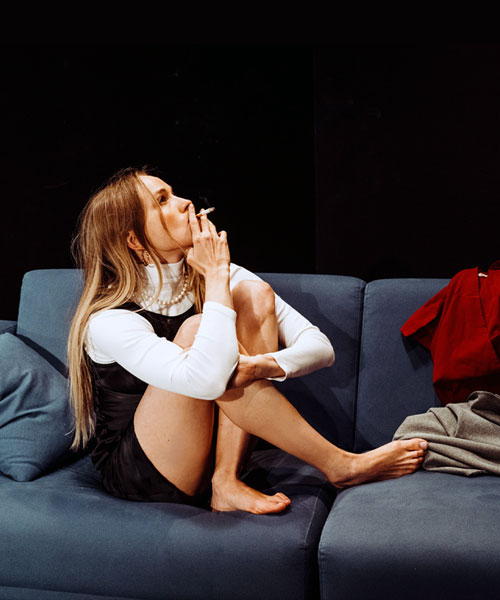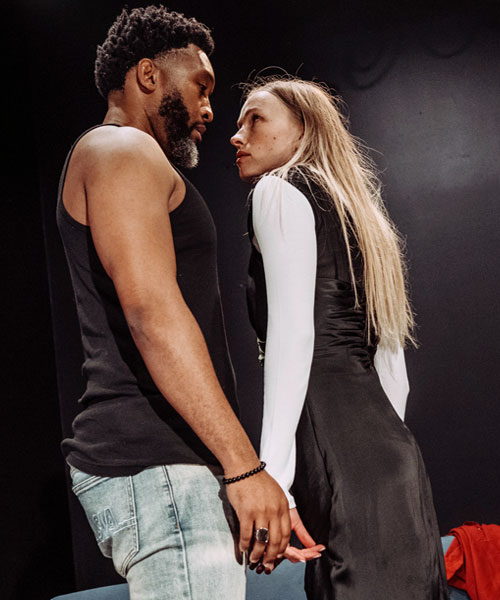
The technique at The Acting Center Los Angeles centers around YOU.
For much of its history, acting training has been a tribal tradition passed down from teacher to student as they sat around the campfire – oops, stage lights. Until the old teacher passes on and the student becomes the new teacher. And the stories – changed, revised, and added to – begin again. Around and around it went.
A teacher or a coach tells the gathered actors stories of “when I worked with so-and-so…”, “when I once did a similar part…” or “when I was studying with this other teacher…” These sorts of teachers also push you to question yourself. They ask or interpret what you “meant” to do, or how you “should have” done it, or “could have” thought about the part. All of this placing the crown of authority on the instructor’s perspective or interpretation rather than in clearly defined principles, skills or patterns of the art form itself.
University and private classes sometimes organize themselves around named “systems” or “methods” based on the traditional handful of books and famous guru-teachers. Yet these have shown to be confusing and incomplete at best. This is easily recognized in hearing nearly every successful actor describes how they were left to pick through the pile and try to select what pieces of technique to use, which book or teacher to listen to sometimes, and what pieces or comments to avoid or give up on just to devise some way for them to do the actual work.
“Big Personality” Teachers and Techniques
Most of these old texts and techniques were closely tied to a “big personality” teacher. Consistent reports and published accounts indicate that in most cases, in their real-world classes, when one of these type of self-important teacher’s approach didn’t work they resorted to either A) coercion, badgering, or even blaming the actors, rather than resolving why their technique didn’t work for the actors in the first place, or B) they shaped performances according to personal taste, reinforcing dependence on their approval rather than clarifying transferable skills, and then accepted the expected applause from their other devoted students.
These classes and approaches were primarily about the teachers’ personalities and personal tastes. They led to actors who were confused and struggled to extract usable tools from a volume of opinions and critical comments, or actors overly devoted to the teacher’s interpretations or aesthetic but doomed to be copycat thinkers addicted to their teacher’s praise and approval.
These methods did not lead to self-sufficient, creatively free, confident, educated, and successful actors. They did not help actors succeed; they hindered them. The few actors that do go on to have successful careers after surviving those efforts to mold, control, and break them, did so despite those efforts not because of them.
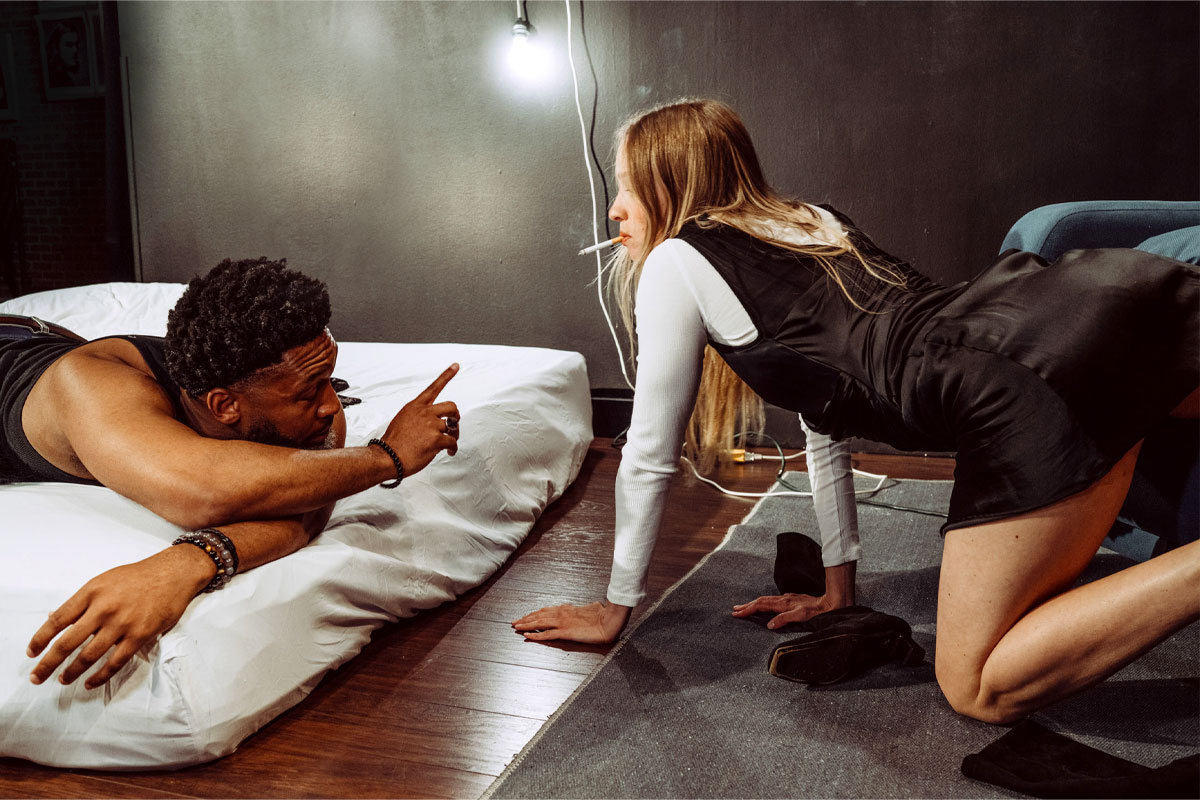
We recognized that actors needed more than inherited anecdotes, partial techniques, and mysterious or guru-like authority figures.
Actors deserve a clear, contemporary, evidence-based examination of what acting actually is, and what it is not. They deserve definable principles that explain and predict what constitutes great acting and how to repeat accomplish it repeatedly.
If great actors (most trained in wildly different ways or not trained at all) can consistently deliver great performances, then there must be reliable facts and consistent patterns to the art of acting beyond these outdated collections of stories, patchwork of tools, and hit-or-miss techniques. In actual fact, most of these great actors, no matter where they studied (or didn’t study) say they had to “find their own way” of acting.
If accomplished actors—trained in wildly different ways or sometimes not trained at all—can consistently produce compelling work, then reliable facts and stable patterns must underlie the art form. Despite this collections of old anecdotes, patchwork tools, and hit-or-miss techniques, successful and great actor describe accomplishing this by first “finding their own way.”
Of course, they did. Acting training has been a confusing, undefined, and unreliable jumble of techniques, teachers, and stories. There was no consolidated research identifying stable skills and recurring patterns. There were no evidenced-based definitions or tested frameworks. Actors were left navigating uncertainty and trial-and-error experimentation.
For each actor it was all sort of “Who knows…?” “There is no clear process…” “Maybe try this….?” “This worked for me once…” “That’s not working, now what?”
This needed to change and required a systematic reexamination.
Acting Research and Development
Starting from about 1898 and continuing forward, we examined everything we could on the art and technique of acting – well-known and historical texts, recorded interviews, rehearsal processes, and performance outcomes. Our focus was not only on what actors said about their work, but on what they actually did — from the time they got a script, until the final bow.
We then tested what we found with thousands of actors. From this research and testing, we debunked stale acting rules and ineffective approaches, kept what really works, and developed what was missing. The outcome is a codified, evidence-based framework grounded in observable patterns and repeatable skills that explains exactly what great acting is, and how to create it.
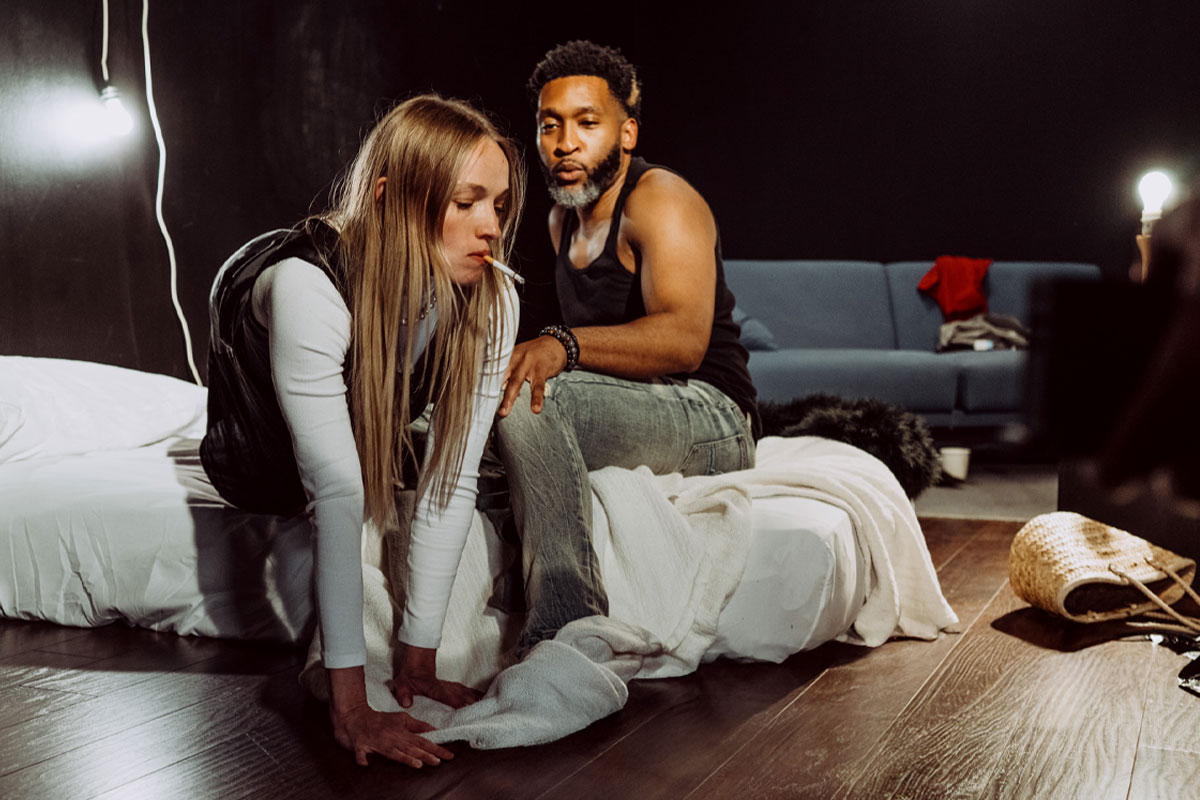
After nearly 20 years of research, testing, and development, it is clear there are indeed consistent patterns and stable fundamental truths, skills and tools that are universal to the art form of acting. These principles are now taught in professional studio practice to working and well-known actors in Los Angeles and internationally.
However, the unexamined and confusing nature of what actors were taught was not the only problem.
The Teaching Model was Part of the Problem
In addition to all this, our research also revealed how actors were being taught – the instructional model itself – was a major contributing factor to actors feeling lost in their work, frustrated in their careers, and even quitting altogether.
All great artists bring their distinct imagination and creative perspective to their work. Every actor (and every artist) is unique. Preserving an actor’s individual creative freedom is of enormous importance in learning to consistently create great work.
This creative freedom was intentionally or unintentionally curbed by the old authority/teacher/critique/feedback teaching system, which had not fundamentally changed for nearly a century. It reinforced dependence and approval, rather than cultivating independent artistic liberty.
A New Studio for Professional Acting Training
Unlike old acting schools, we don’t rely on the stories of other actors, or subject you to the creative coercion of “teachers” or “coaches.” Instead, we show you how to free your own work into the vast reservoir of your own ideas and perspectives.
In addition to the real skills of acting, you also learn how to better understand, foster, and grow your own creative freedom.
With a genuine technique based on actual core acting concepts that can be clearly stated and easily shown, plus real creative freedom, your confidence, skill, and work take flight.
At the Acting Center, YOU are the center of the work we do – your skills, your perspective, and your creative freedom.
The art of great acting is no longer mysterious, unexplainable, or baffling. We can show you how to be a great actor. We can show you how to be artistically free. And you can show the world the great work you’ve always wanted to do.
If you’d like to learn more or talk about your own work or career, let’s chat.
The technique at The Acting Center Los Angeles centers around YOU.
For much of its history, acting training has been a tribal tradition passed down from teacher to student as they sat around the campfire – oops, stage lights. Until the old teacher passes on and the student becomes the new teacher. And the stories – changed, revised, and added to – begin again. Around and around it went.
A teacher or a coach tells the gathered actors stories of “when I worked with so-and-so…”, “when I once did a similar part…” or “when I was studying with this other teacher…” These sorts of teachers also push you to question yourself. They ask or interpret what you “meant” to do, or how you “should have” done it, or “could have” thought about the part. All of this placing the crown of authority on the instructor’s perspective or interpretation rather than in clearly defined principles, skills or patterns of the art form itself.
University and private classes sometimes organize themselves around named “systems” or “methods” based on the traditional handful of books and famous guru-teachers. Yet these have shown to be confusing and incomplete at best. This is easily recognized in hearing nearly every successful actor describes how they were left to pick through the pile and try to select what pieces of technique to use, which book or teacher to listen to sometimes, and what pieces or comments to avoid or give up on just to devise some way for them to do the actual work.
“Big Personality” Teachers and Techniques
Most of these old texts and techniques were closely tied to a “big personality” teacher. Consistent reports and published accounts indicate that in most cases, in their real-world classes, when one of these type of self-important teacher’s approach didn’t work they resorted to either A) coercion, badgering, or even blaming the actors, rather than resolving why their technique didn’t work for the actors in the first place, or B) they shaped performances according to personal taste, reinforcing dependence on their approval rather than clarifying transferable skills, and then accepted the expected applause from their other devoted students.
These classes and approaches were primarily about the teachers’ personalities and personal tastes. They led to actors who were confused and struggled to extract usable tools from a volume of opinions and critical comments, or actors overly devoted to the teacher’s interpretations or aesthetic but doomed to be copycat thinkers addicted to their teacher’s praise and approval.
These methods did not lead to self-sufficient, creatively free, confident, educated, and successful actors. They did not help actors succeed; they hindered them. The few actors that do go on to have successful careers after surviving those efforts to mold, control, and break them, did so despite those efforts not because of them.
We recognized that actors needed more than inherited anecdotes, partial techniques, and mysterious or guru-like authority figures.
Actors deserve a clear, contemporary, evidence-based examination of what acting actually is, and what it is not. They deserve definable principles that explain and predict what constitutes great acting and how to repeat accomplish it repeatedly.
If great actors (most trained in wildly different ways or not trained at all) can consistently deliver great performances, then there must be reliable facts and consistent patterns to the art of acting beyond these outdated collections of stories, patchwork of tools, and hit-or-miss techniques. In actual fact, most of these great actors, no matter where they studied (or didn’t study) say they had to “find their own way” of acting.
If accomplished actors—trained in wildly different ways or sometimes not trained at all—can consistently produce compelling work, then reliable facts and stable patterns must underlie the art form. Despite this collections of old anecdotes, patchwork tools, and hit-or-miss techniques, successful and great actor describe accomplishing this by first “finding their own way.”
Of course, they did. Acting training has been a confusing, undefined, and unreliable jumble of techniques, teachers, and stories. There was no consolidated research identifying stable skills and recurring patterns. There were no evidenced-based definitions or tested frameworks. Actors were left navigating uncertainty and trial-and-error experimentation.
For each actor it was all sort of “Who knows…?” “There is no clear process…” “Maybe try this….?” “This worked for me once…” “That’s not working, now what?”
This needed to change and required a systematic reexamination.
Acting Research and Development
Starting from about 1898 and continuing forward, we examined everything we could on the art and technique of acting – well-known and historical texts, recorded interviews, rehearsal processes, and performance outcomes. Our focus was not only on what actors said about their work, but on what they actually did — from the time they got a script, until the final bow.
We then tested what we found with thousands of actors. From this research and testing, we debunked stale acting rules and ineffective approaches, kept what really works, and developed what was missing. The outcome is a codified, evidence-based framework grounded in observable patterns and repeatable skills that explains exactly what great acting is, and how to create it.
After nearly 20 years of research, testing, and development, it is clear there are indeed consistent patterns and stable fundamental truths, skills and tools that are universal to the art form of acting. These principles are now taught in professional studio practice to working and well-known actors in Los Angeles and internationally.
However, the unexamined and confusing nature of what actors were taught was not the only problem.
The Teaching Model was Part of the Problem
In addition to all this, our research also revealed how actors were being taught – the instructional model itself – was a major contributing factor to actors feeling lost in their work, frustrated in their careers, and even quitting altogether.
All great artists bring their distinct imagination and creative perspective to their work. Every actor (and every artist) is unique. Preserving an actor’s individual creative freedom is of enormous importance in learning to consistently create great work.
This creative freedom was intentionally or unintentionally curbed by the old authority/teacher/critique/feedback teaching system, which had not fundamentally changed for nearly a century. It reinforced dependence and approval, rather than cultivating independent artistic liberty.
A New Studio for Professional Acting Training
Unlike old acting schools, we don’t rely on the stories of other actors, or subject you to the creative coercion of “teachers” or “coaches.” Instead, we show you how to free your own work into the vast reservoir of your own ideas and perspectives.
In addition to the real skills of acting, you also learn how to better understand, foster, and grow your own creative freedom.
With a genuine technique based on actual core acting concepts that can be clearly stated and easily shown, plus real creative freedom, your confidence, skill, and work take flight.
At the Acting Center, YOU are the center of the work we do – your skills, your perspective, and your creative freedom.
The art of great acting is no longer mysterious, unexplainable, or baffling. We can show you how to be a great actor. We can show you how to be artistically free. And you can show the world the great work you’ve always wanted to do.
If you’d like to learn more or talk about your own work or career, let’s chat.
The technique at The Acting Center Los Angeles centers around YOU.
For much of its history, acting training has been a tribal tradition passed down from teacher to student as they sat around the campfire – oops, stage lights. Until the old teacher passes on and the student becomes the new teacher. And the stories – changed, revised, and added to – begin again. Around and around it went.
A teacher or a coach tells the gathered actors stories of “when I worked with so-and-so…”, “when I once did a similar part…” or “when I was studying with this other teacher…” These sorts of teachers also push you to question yourself. They ask or interpret what you “meant” to do, or how you “should have” done it, or “could have” thought about the part. All of this placing the crown of authority on the instructor’s perspective or interpretation rather than in clearly defined principles, skills or patterns of the art form itself.
University and private classes sometimes organize themselves around named “systems” or “methods” based on the traditional handful of books and famous guru-teachers. Yet these have shown to be confusing and incomplete at best. This is easily recognized in hearing nearly every successful actor describes how they were left to pick through the pile and try to select what pieces of technique to use, which book or teacher to listen to sometimes, and what pieces or comments to avoid or give up on just to devise some way for them to do the actual work.
“Big Personality” Teachers and Techniques
Most of these old texts and techniques were closely tied to a “big personality” teacher. Consistent reports and published accounts indicate that in most cases, in their real-world classes, when one of these type of self-important teacher’s approach didn’t work they resorted to either A) coercion, badgering, or even blaming the actors, rather than resolving why their technique didn’t work for the actors in the first place, or B) they shaped performances according to personal taste, reinforcing dependence on their approval rather than clarifying transferable skills, and then accepted the expected applause from their other devoted students.
These classes and approaches were primarily about the teachers’ personalities and personal tastes. They led to actors who were confused and struggled to extract usable tools from a volume of opinions and critical comments, or actors overly devoted to the teacher’s interpretations or aesthetic but doomed to be copycat thinkers addicted to their teacher’s praise and approval.
These methods did not lead to self-sufficient, creatively free, confident, educated, and successful actors. They did not help actors succeed; they hindered them. The few actors that do go on to have successful careers after surviving those efforts to mold, control, and break them, did so despite those efforts not because of them.
We recognized that actors needed more than inherited anecdotes, partial techniques, and mysterious or guru-like authority figures.
Actors deserve a clear, contemporary, evidence-based examination of what acting actually is, and what it is not. They deserve definable principles that explain and predict what constitutes great acting and how to repeat accomplish it repeatedly.
If great actors (most trained in wildly different ways or not trained at all) can consistently deliver great performances, then there must be reliable facts and consistent patterns to the art of acting beyond these outdated collections of stories, patchwork of tools, and hit-or-miss techniques. In actual fact, most of these great actors, no matter where they studied (or didn’t study) say they had to “find their own way” of acting.
If accomplished actors—trained in wildly different ways or sometimes not trained at all—can consistently produce compelling work, then reliable facts and stable patterns must underlie the art form. Despite this collections of old anecdotes, patchwork tools, and hit-or-miss techniques, successful and great actor describe accomplishing this by first “finding their own way.”
Of course, they did. Acting training has been a confusing, undefined, and unreliable jumble of techniques, teachers, and stories. There was no consolidated research identifying stable skills and recurring patterns. There were no evidenced-based definitions or tested frameworks. Actors were left navigating uncertainty and trial-and-error experimentation.
For each actor it was all sort of “Who knows…?” “There is no clear process…” “Maybe try this….?” “This worked for me once…” “That’s not working, now what?”
This needed to change and required a systematic reexamination.
Acting Research and Development
Starting from about 1898 and continuing forward, we examined everything we could on the art and technique of acting – well-known and historical texts, recorded interviews, rehearsal processes, and performance outcomes. Our focus was not only on what actors said about their work, but on what they actually did — from the time they got a script, until the final bow.
We then tested what we found with thousands of actors. From this research and testing, we debunked stale acting rules and ineffective approaches, kept what really works, and developed what was missing. The outcome is a codified, evidence-based framework grounded in observable patterns and repeatable skills that explains exactly what great acting is, and how to create it.
After nearly 20 years of research, testing, and development, it is clear there are indeed consistent patterns and stable fundamental truths, skills and tools that are universal to the art form of acting. These principles are now taught in professional studio practice to working and well-known actors in Los Angeles and internationally.
However, the unexamined and confusing nature of what actors were taught was not the only problem.
The Teaching Model was Part of the Problem
In addition to all this, our research also revealed how actors were being taught – the instructional model itself – was a major contributing factor to actors feeling lost in their work, frustrated in their careers, and even quitting altogether.
All great artists bring their distinct imagination and creative perspective to their work. Every actor (and every artist) is unique. Preserving an actor’s individual creative freedom is of enormous importance in learning to consistently create great work.
This creative freedom was intentionally or unintentionally curbed by the old authority/teacher/critique/feedback teaching system, which had not fundamentally changed for nearly a century. It reinforced dependence and approval, rather than cultivating independent artistic liberty.
A New Studio for Professional Acting Training
Unlike old acting schools, we don’t rely on the stories of other actors, or subject you to the creative coercion of “teachers” or “coaches.” Instead, we show you how to free your own work into the vast reservoir of your own ideas and perspectives.
In addition to the real skills of acting, you also learn how to better understand, foster, and grow your own creative freedom.
With a genuine technique based on actual core acting concepts that can be clearly stated and easily shown, plus real creative freedom, your confidence, skill, and work take flight.
At the Acting Center, YOU are the center of the work we do – your skills, your perspective, and your creative freedom.
The art of great acting is no longer mysterious, unexplainable, or baffling. We can show you how to be a great actor. We can show you how to be artistically free. And you can show the world the great work you’ve always wanted to do.
If you’d like to learn more or talk about your own work or career, let’s chat.