The fundamental truths about acting are profound but rather simple. They require practice, but they are not complicated or mysterious.
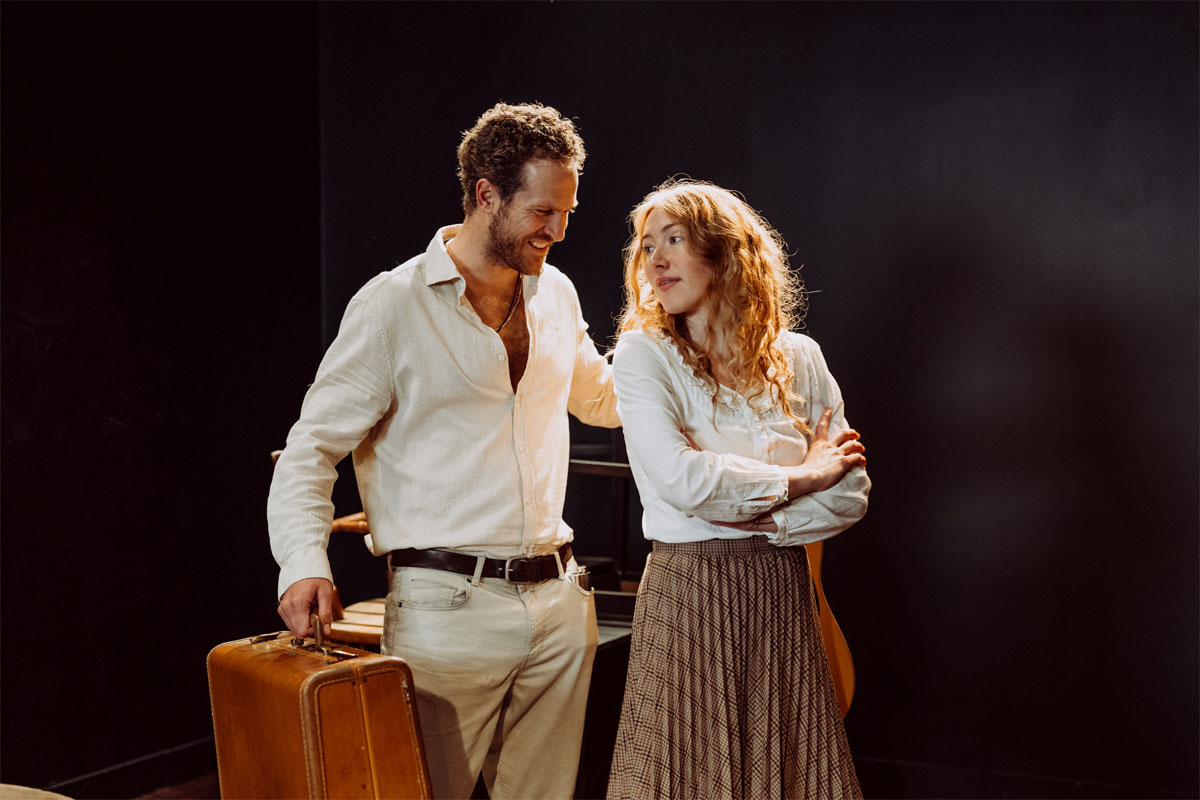
Actors adopt another person’s point of view, ideas, feelings, physicality, and outlook. They take on the character’s identity and live that life for the duration of the performance. When the work is done, they let go of the character and are again, themselves.
This is something people often do naturally, without thinking about it. In a moment, someone may realize they are “being their dad”—speaking, behaving, and even standing the same way, with familiar gestures and facial expressions. While this isn’t always desirable in everyday life—as we don’t want to lose control of our perspective—it clearly illustrates that adopting another point of view is something people are already capable of doing.
Adopting Another Person’s Point of View
Actors change their identity intentionally, it’s no longer something that happens randomly or automatically. Acting is the skill of decidedly being another person and then, when done performing, not being that other person.
By fully being the character, the actor is no longer constrained—or pulled out of the moment—by their own experience, habits or inhibitions. They are then safe to experience that character’s life, emotions, reactions, and ideas. They are free inside the character’s world.
It’s fun. It’s intense. It’s exciting. It’s illuminating. And it is not a confusion of identity, “is it me or the character?” And it doesn’t require stirring up the actor’s own past, as the emotions and sensations flow naturally from the life you are living in the moment.
The actor lives as this person in the present moment of that person’s life fully and completely. They are not being an actor who is simultaneously manipulating a performance while trying to be the character. That split approach results in a half-in, half-out performance—not a real person having a real experience, but a pretended character having a pretended one. Audiences can feel the difference every time.
Great acting is about inhabiting the character—being a real person, in a real life, having a real experience. When acting is approached this way, performances become not only real, but intense, alive, and exciting—for both the actor and the audience.
Why Fully Inhabiting The Character Matters
It’s important to acknowledge that there is another category of acting in which the performer plays themselves—or a version of themselves. This was the original meaning of the term “ham acting.” The phrase comes from the idea that if something looks like ham, smells like ham, and tastes like ham—it is ham. In other words, with certain performers, “what you see is what you get.”
It does require confidence, and it can be an expedient way to begin performing. When done with strong personal confidence, this style of performing can be entertaining and even feel realistic.
However, consistently playing themselves opens the door for the work to collapse into the actor’s own life. This approach can leave a residual effect after the work is done—and can even make the work itself more difficult. It also risks relying on personal emotional trauma and negative experiences, which over time can take a serious toll on an actor’s health. Additionally, playing themselves all the time can become rather stale and monotonous to both the actor and audiences, making their personal enjoyment and professional careers stall or simply fizzle out altogether.
We’ve found that most performers don’t pursue acting to simply play themselves.
Most actors are drawn to the craft to enter new worlds—to see the world from another character’s eyes and experience lives, dreams, and feelings beyond their own. They want to live inside the hearts and minds of characters that genuinely connect with audiences and the world. This is the work most actors admire and aspire to create—work that is simple, real, and accessible, yet also transformational, collaborative, and alive with possibility.
Great Acting is Transformational
Great acting is not about showing a performance to an audience—it is about inhabiting a new world and creating a transformational experience.
Acting is a profound ability, but rather simple once you get the hang of it.
At The Acting Center, we have spent decades clarifying and codifying how to train great actors in a clear, direct approach.
We have developed unique and highly effective tools that bring the art of acting into a modern era. This approach clearly defines what acting is, how it is done, and what distinguishes good work from great work.
As you begin working with these core concepts, the unnecessary complications that have accumulated around acting fall away—and your work becomes deeper, freer, and more versatile.
We can show you how to become a great actor. And we can help get there faster and more directly than ever before. This is the work we do at The Acting Center.
Ready to start developing your own natural acting skill? Our Scene Study classes are designed around exactly the principles described here. We’d love to hear from you.
"The Acting Center is one of the most effective tools I’ve been lucky enough to lorem ipsum dolor copy goes here"
"Lorem ipsum dolor sit amet, consectetur adipiscing elit, sed do eiusmod tempor incididunt ut labore et dolore."
"Lorem ipsum dolor sit amet, consectetur adipiscing elit, sed do eiusmod tempor incididunt ut labore et dolore."
"Lorem ipsum dolor sit amet, consectetur adipiscing elit, sed do eiusmod tempor incididunt ut labore et dolore."
"Lorem ipsum dolor sit amet, consectetur adipiscing elit, sed do eiusmod tempor incididunt ut labore et dolore."
Working actors recommend The Acting Center of Los Angeles
Ready for real actor training? Explore our classes.